Trust starts with transparency
I was troubled to read the September 16 article in the Driftwood reporting that Islands Trust Council has approved removing meeting agendas and minutes created before November 2018 from its website, with more records coming down as they reach eight years old.
This is a huge step backwards for transparency and accountability. The Trust says you’ll still be able to get those records by email, for free. But how do you ask for something you don’t know exists? How do you follow years of decisions when the history is no longer there to browse? And what will it cost in staff time to retrieve and send those records? Why make residents ask and staff respond when people could find the information themselves? That creates extra work for staff, extra delay for residents, less transparency, and another demand on taxpayers’ money.
Keep the records public
The Driftwood reports that staff cited website slowdowns as a reason for the change. Why remove public access before showing whether better hosting, improved search or a separate online archive could solve the problem? What did the existing system cost, and what alternatives were considered? Would a searchable public archive cost less than having staff retrieve and send out records individually by email? Council should show residents the evidence, costs and reasons behind its choice. According to the report, recommendations on website improvements are not expected to reach trustees until 2028.
At the moment, so much of the Trust’s work is buried in PDFs of agendas and minutes on its website. You can spend hours digging through them trying to piece together what happened with a land-use application or find a report we’ve commissioned. The information is technically public, but it’s hard to search and even harder to follow across years of meetings. Research we’ve paid for, recommendations and past decisions get lost in the pile, and we end up going over the same ground again and again, doomed to repeat our mistakes (and continue wasting taxpayers’ money).
Making the records useful
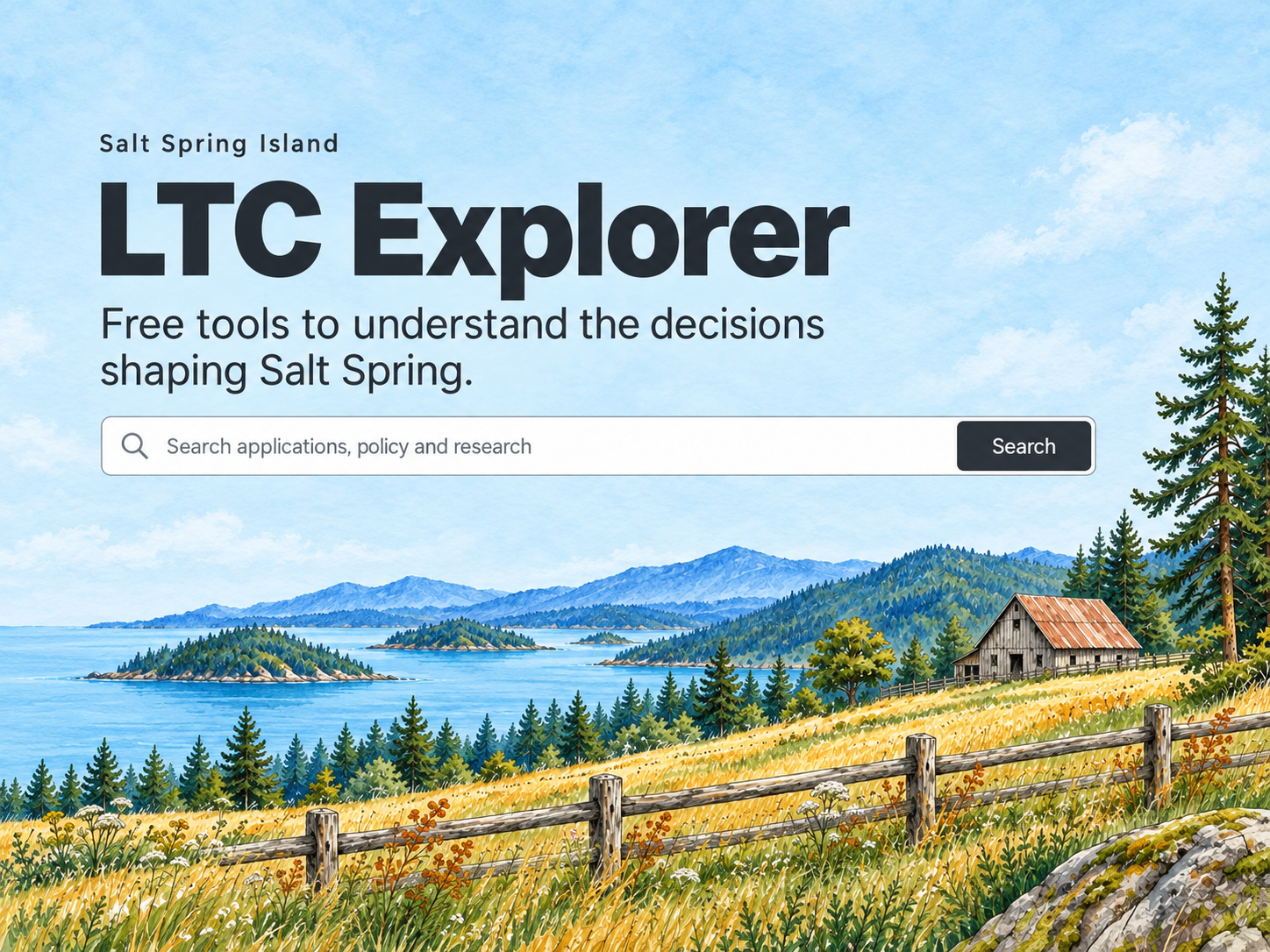
Modern computing tools make it possible to bring together decades of applications, research and decisions, and trace connections across thousands of pages. With input from friends and neighbours, I’ve been building LTC Explorer over the past few weeks to make that accumulated public knowledge easier to find, understand, and use.
LTC Explorer is now live as a public beta at explore.saltspring.info, which means it is available for testing and feedback. Anyone can use it to look up applications, explore reports and decisions, and go straight to the original documents. Whoever is elected as our next trustees could also use it to follow the history of applications and support informed decisions.
With the Trust planning to remove older records, I’ve also downloaded and indexed all publicly available documents on its website to keep them accessible through LTC Explorer. Public information should become easier to find and understand over time. We should be keeping these records publicly accessible and searchable, and giving staff better tools to manage them. That is part of building trust in the Trust.
Following through on decisions
Finding public information is only the first step. We also need to know what happened to it. If we paid for a report, what did it recommend? What did the Trust decide to do, and was that work carried out? We should explain which recommendations we accept, which we decline and why. For the work we agree to do, we need clear responsibilities, resources, timelines and progress reports.
People’s time and money matter. Before commissioning more work, we should establish what we already know and what still needs answering. Clear guidelines, early identification of requirements and explanations when those requirements change help people understand the process and hold the Trust accountable. There should be no unexplained shifting of the goalposts. People should be able to see which rules and evidence a decision rests on, and expect the same standards to apply to everyone.
These are the basics we need to make progress on housing, water and environmental protection. We need to understand the evidence, make decisions, act on them and check the results. The public should be able to follow that process and see how its input was considered.
What I would bring to the job
This is experience I would bring to the job. I understand how information systems work, and I am already building tools to help our community use its public records. If elected, I will bring forward practical proposals for clear requirements, published service targets and a public record of decisions and outstanding actions. I will work with the other trustees and staff to get improvements adopted and implemented. I will report quarterly on my commitments, what has been done, what remains outstanding and what I am doing to move it forward.
You may have also noticed that my campaign website (EthanWildingSSI.com) and my lawn signs feature the words Reimagine the Trust. What that means is making our local government easier to understand, more accountable, and better able to do its job. I built LTC Explorer (explore.saltspring.info) to start putting that into practice: making it easier to follow land-use applications, find research we as taxpayers have already paid for, and understand how decisions were reached. I want these tools to help open up the conversation and give more people a way to take part. That is exactly what the Trust should be doing.